
What Is a Technology Stack?
The term technology stack refers to the combination of software, programming languages, frameworks, and tools that work together to build and run an application. Think of it as the foundation and structure that supports your project, from user interactions down to database storage.
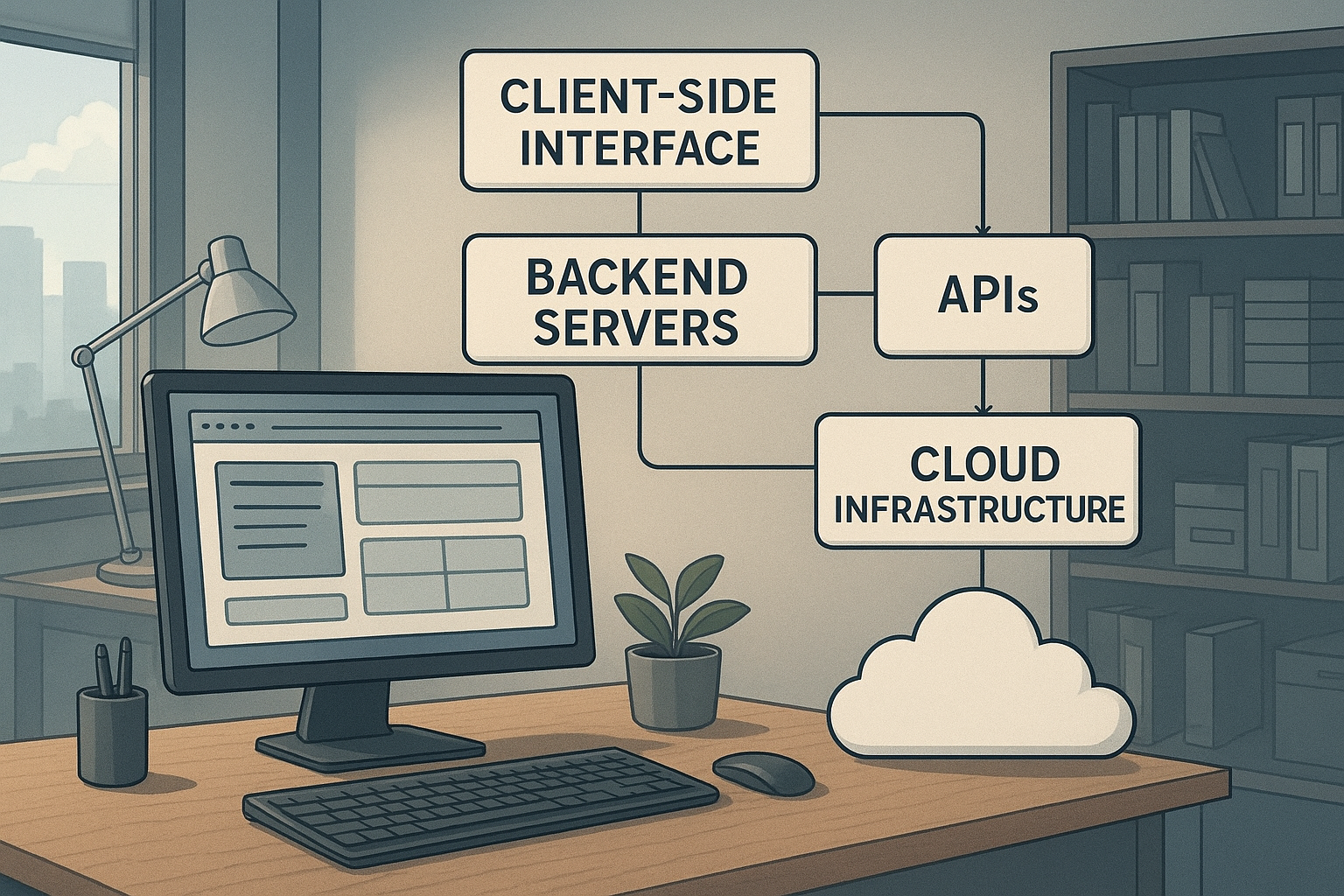
At a glance, a technology stack functions as a set of building blocks. Each block or layer serves a unique role, handling specific tasks such as presenting web pages, communicating with databases, or hosting files in the cloud. Selecting the right stack impacts not only software performance, but also scalability and long-term maintainability.
Many companies align their stack choices with project requirements, team expertise, and business goals. With so many options, understanding each layer is crucial before making a commitment.
Core Layers of a Technology Stack
The Four Fundamental Layers
- Frontend (Client Side): Everything the user interacts with directly, including browsers, mobile apps, and graphical interfaces.
- Backend (Server Side): The logic, data processing, and control center, typically running on remote servers.
- Database: Where application data is securely stored and managed.
- Infrastructure: The foundational services, like servers, networks, and cloud platforms, that deliver the application to users.
Some modern stacks also include a DevOps layer—tools for continuous integration, deployment, and monitoring.
Important Information Table
| Layer | Main Purpose | Typical Technologies |
|---|---|---|
| Frontend | User interactions & display | React, Angular, Vue.js, HTML/CSS, JavaScript |
| Backend | Business logic & APIs | Node.js, Django, Spring Boot, Ruby on Rails |
| Database | Data storage & retrieval | MySQL, PostgreSQL, MongoDB |
| Infrastructure | Hosting & scaling | AWS, Azure, Google Cloud, Docker, Kubernetes |
| DevOps (optional) | Automation & monitoring | Jenkins, GitHub Actions, Prometheus |
Key Components and Examples
Essential Technologies in Each Layer
Every application requires careful selection of components for each layer. Here’s what typically goes into a full technology stack:
- Frontend technologies: HTML5, CSS3, JavaScript, TypeScript, React, Vue.js, Angular
- Backend frameworks: Express.js (Node.js), Django (Python), Spring Boot (Java), Flask, Ruby on Rails
- Databases: SQL-based (PostgreSQL, MySQL), NoSQL (MongoDB, Redis)
- APIs: REST, GraphQL
- Infrastructure: Virtual machines, containers (Docker), orchestration (Kubernetes), managed hosting (AWS, Azure, Google Cloud)
- DevOps/CI/CD: Jenkins, CircleCI, GitHub Actions
Choosing the best fit often requires comparing trade-offs in performance, community support, and integration.
Choosing the Right Stack
Factors to Consider
With so many technology stack options, what matters most for your project? Many teams face challenges like scaling, maintainability, and recruiting developer talent. The main difference that stands out between stacks often lies in performance, security, and ecosystem maturity.
- Project scope and requirements
- Team expertise and experience
- Desired scalability and growth potential
- Budget constraints and time to market
- Integration with other tools and existing systems
Taking a careful approach helps you avoid roadblocks and technical debt later on.
Modern Stack Examples
Some technology stacks have become industry standards. Here’s a look at three widely adopted options:
- LAMP Stack: Linux, Apache, MySQL, PHP — the classic open-source web setup, still reliable for many use cases.
- MEAN/MERN Stack: MongoDB, Express.js, Angular/React, Node.js — ideal for fast, scalable JavaScript-powered web apps.
- Serverless Stacks: AWS Lambda, API Gateway, DynamoDB — abstracts away infrastructure for rapid cloud deployments.
Each example offers different strengths. MEAN/MERN stacks focus on developer efficiency with a single language throughout (JavaScript), while serverless setups shine for teams needing to launch globally at scale.
Pros and Cons of Popular Stacks
LAMP, MEAN, and Serverless at a Glance
- LAMP: Great stability, large support community; may lack the flexibility or real-time capability modern apps require.
- MEAN/MERN: Unified language (JavaScript) boosts productivity and code reuse; however, JavaScript fatigue and complex state management may challenge newer teams.
- Serverless: Superb scalability, reduced server maintenance; cost control and debugging in distributed environments may require careful planning.
The main difference that will influence your decision lies in your application’s target users, performance needs, and preferred workflow tools.
Frequently Asked Questions (FAQ)
What is a technology stack in simple terms?
A technology stack is the set of programming languages, frameworks, libraries, and tools developers use to build and run applications. Think of it as the blueprint powering software projects.
What are the main layers of a technology stack?
The core layers are frontend (user interface), backend (server logic), database (storage), and infrastructure (hosting, scaling, security). Some stacks add DevOps for automation.
How do I choose the right stack for my project?
Evaluate your functional needs, team skills, scalability requirements, time constraints, and integration needs. Try to select widely adopted technologies with strong community support.
Does my stack affect scalability and performance?
Absolutely. The technology stack directly impacts the speed, reliability, and future growth of your application. The right stack makes it easier to adapt and perform at scale.
Can I mix components from different stacks?
Yes, modern development often blends tools from various stacks for custom needs. Just make sure each component integrates well for smooth workflows.