
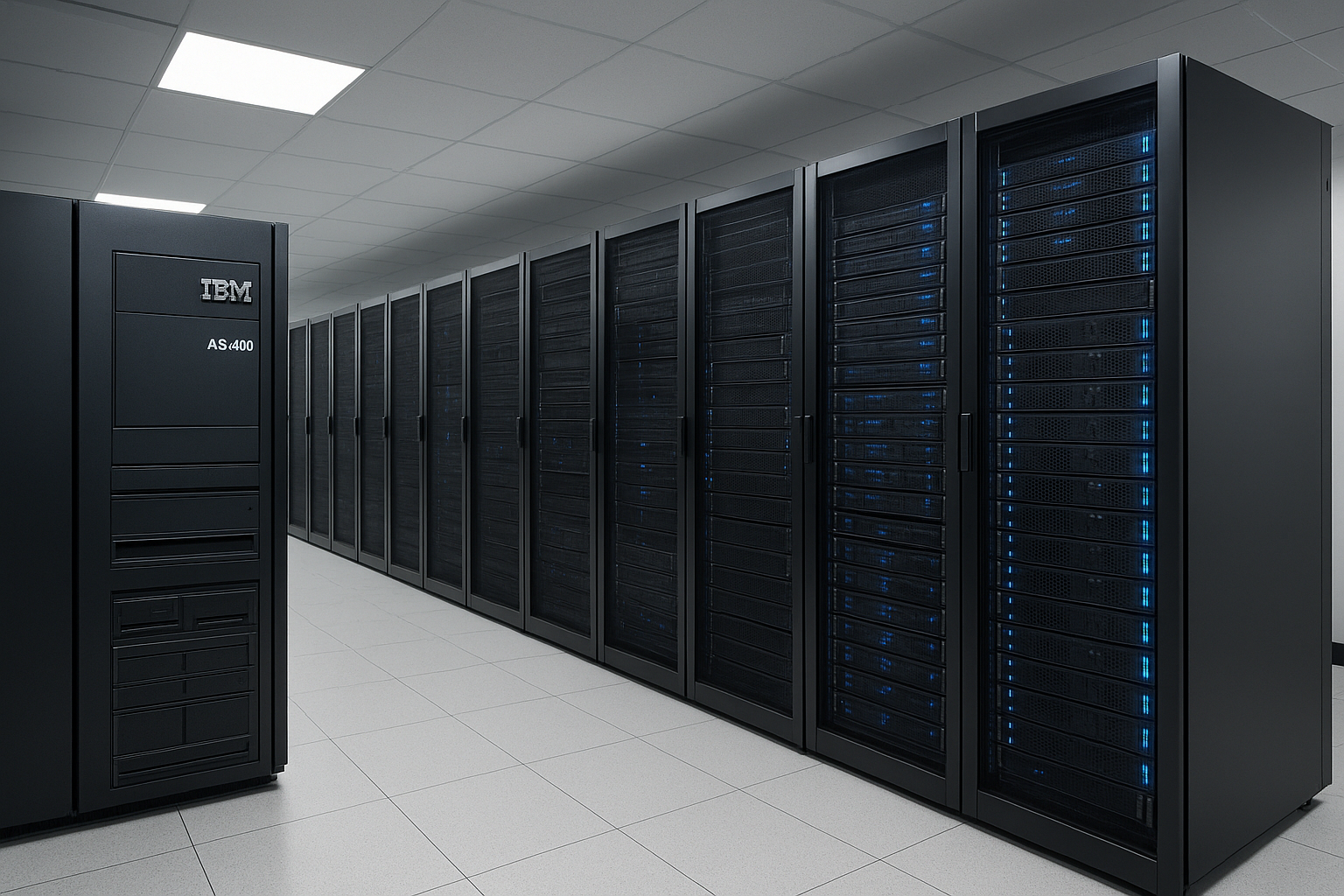

What is AS400?
The AS400 (Application System/400), now rebranded as IBM iSeries and IBM Power Systems, is a family of midrange business computers introduced by IBM in 1988. Its design focuses on versatility, integrating applications, databases, and security into a single platform that simplifies management.
This system gained popularity for its reliability and deep vertical integration. Organizations in finance, distribution, and manufacturing still rely heavily on AS400 to run core business operations. Its robust operating system—formerly OS/400—has earned a reputation for virtually continuous uptime.
But as technology has changed, the need to update or modernize AS400 systems has grown. The discussion now centers on bridging mature, proven architecture with new digital expectations.
History and Evolution of the AS400
IBM launched the original AS400 in 1988, merging technologies from its System/36 and System/38 product lines. By integrating hardware and software tightly, IBM created a platform focused on business reliability over raw hardware speed.
Over time, the AS400 evolved through several generations. The system was renamed IBM iSeries in 2000 and later became part of the IBM Power Systems brand. Despite new names, the core OS—now called IBM i—remains deeply compatible with legacy applications.
This long history means many organizations still operate applications first written decades ago. Modern hardware regularly runs software from the system’s earliest days, a testament to its backward compatibility and stability—a rare trait in enterprise computing.
Key Features of AS400
The AS400 platform is renowned for blending all-in-one convenience with exceptional dependability. At a glance, its main features include:
- Integrated DB2 database
- High-availability architecture and nearly continuous uptime
- Centralized management of user profiles, data, and applications
- Tight security controls built into the OS and hardware
- Support for legacy languages like RPG, COBOL, and modern languages (Java, PHP)
- Strong backward compatibility with thousands of earlier applications
- Middleware and integration for connecting with other enterprise systems
These features explain why AS400 systems are often described as “workhorses” of business IT—a reliable, flexible centerpiece in large organizations for decades.
Why Modernize AS400 Systems?
| Reason | Impact |
|---|---|
| Compatibility with modern apps | Allows integration with web, mobile, and cloud technologies |
| Security enhancement | Addresses new threats with updates and better monitoring |
| Maintainability | Reduces technical debt and reliance on rare RPG/COBOL skills |
| Business agility | Improves response to changing markets and customer expectations |
| Cost management | Lowers ongoing expenses and power usage |
However, enterprises face a dilemma. While AS400’s reliability is valuable, legacy interfaces, maintenance skills, and integration gaps create bottlenecks. Modernizing the platform isn’t just about improving looks—it’s about enabling digital transformation across the business.
Common AS400 Modernization Approaches
Organizations can modernize AS400 in several ways. The right path depends on budget, business priorities, and technical risk. Here are the three most popular strategies:
- Replatforming: Moving core workloads to updated IBM i hardware or transitioning to cloud-managed Power Systems.
- Code modernization: Updating RPG/COBOL code, introducing APIs, or refactoring monolithic apps into microservices.
- Interface modernization: Replacing 5250 “green screen” interfaces with browser-based dashboards and user-friendly portals.
Each approach has trade-offs. Replatforming keeps legacy code but with new infrastructure. Code modernization supports agility but can be slower and riskier. Interface upgrades deliver fast user gains but maintain old code beneath the surface. Often, a blended approach is chosen.
Benefits for Today’s Enterprises
- Improved productivity from upgraded workflows and better user interfaces
- Seamless integration with cloud, analytics, and mobile platforms
- Lower operating costs due to reduced hardware and licensing expenses
- Future-proofing IT infrastructure by enabling support, updates, and innovation
- Enhanced security through up-to-date, managed environments
With modernization, organizations gain the flexibility to launch new products, improve customer experience, and attract talent who prefer web-based tools over legacy terminals. Notably, these benefits are often realized in stages, making modernization less risky than full system replacements.
Common Challenges in AS400 Modernization
Despite clear rewards, many enterprises hesitate to touch mission-critical AS400 systems. The main concerns include:
- Business risk: Complex workloads mean errors could disrupt core operations
- Skill shortages: Fewer IT staff understand legacy RPG, CL, and COBOL code
- Data migration complexity: Moving decades of data without downtime is demanding
- Legacy dependencies: Numerous integrations and processes are closely tied to the platform
Forward-thinking organizations manage these risks by taking an incremental, well-planned modernization approach—testing thoroughly and backing up at every phase.
Resources and Where to Learn More
| Resource Type | Link |
|---|---|
| Official IBM i Documentation | IBM Documentation |
| Modernization Tutorials | IBM Developer |
| AS400 Community Forums | Tek-Tips iSeries Forum |
| Open Source Tools | OpenSource IBM i Projects |
Exploring these resources lets you dive deeper into AS400 modernization, discover community-driven knowledge, and learn how global enterprises tackle practical challenges every day.
Frequently Asked Questions About AS400
- Is AS400 still used in 2026?
- Yes—many large enterprises run critical workloads on modern IBM i hardware, benefiting from decades of stable operation, even as interfaces and tools evolve.
- What replaced AS400?
- IBM rebranded AS400 as iSeries, then IBM i on Power Systems. The technology stack evolved, but backward compatibility assures software transitions smoothly.
- Can AS400 run web or cloud applications?
- Absolutely. With proper modernization—APIs, middleware, or new interfaces—AS400 connects with web, cloud, and mobile platforms, joining the digital business era.
- Does AS400 require legacy programming skills?
- Some core development still uses RPG, CL, or COBOL. However, tools now support modern languages like Java, PHP, and Python for new applications.
- How hard is it to modernize AS400?
- It varies by project. With solid planning and incremental upgrades, most organizations experience steady modernization—balancing continuity and innovation.