
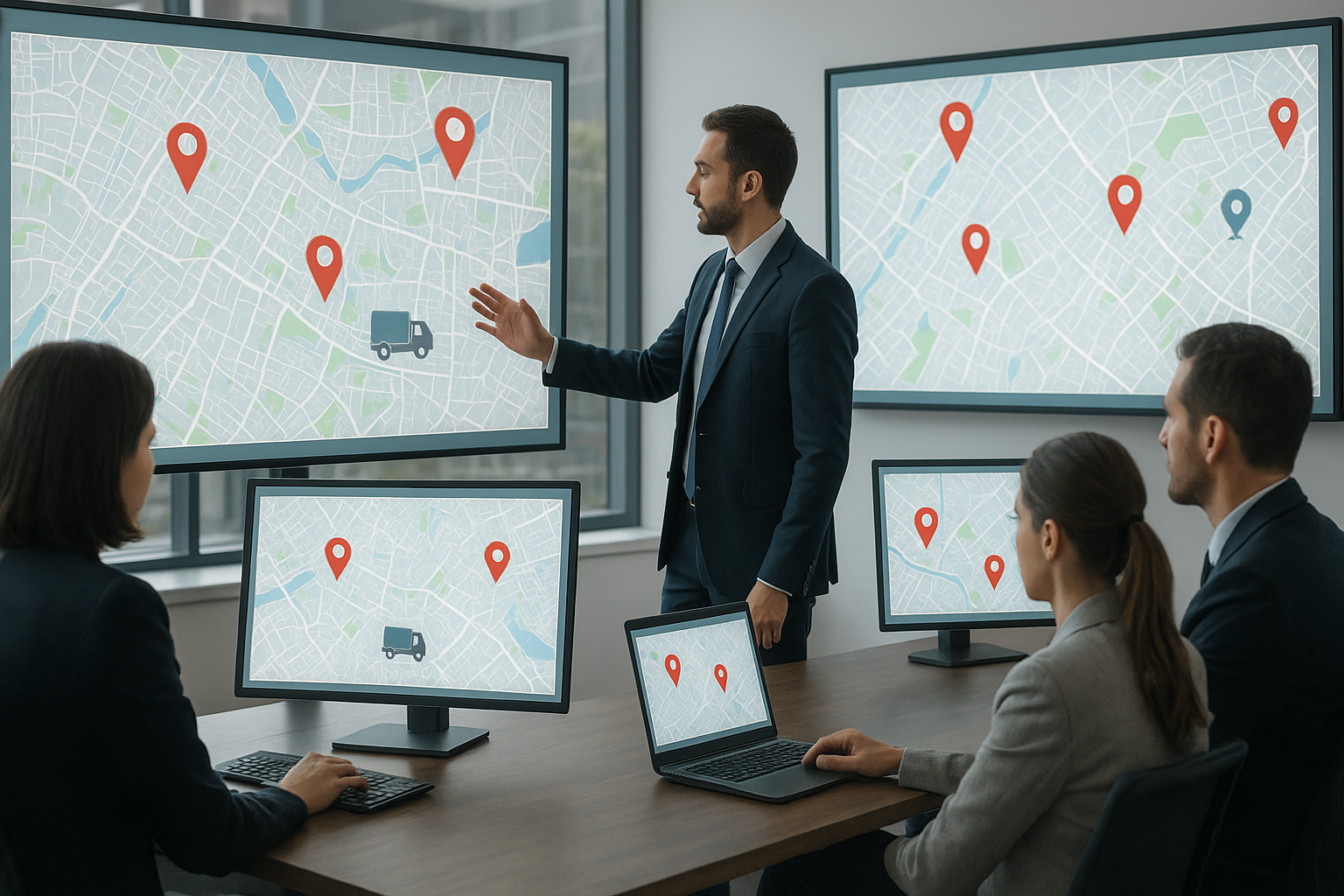

Geotracking is the real-time monitoring of device locations via technologies such as GPS, Wi-Fi, and mobile networks. Companies now use it to boost efficiency, personalize experiences, and strengthen security. This guide explores what geotracking is, how it works, its core technologies, and practical business applications—all explained simply for clear understanding.
Important Information Table
| Aspect | Details |
|---|---|
| Definition | Geotracking is the electronic process of pinpointing the geographic location of a device or object in real time. |
| Core Technologies | GPS, Wi-Fi positioning, RFID, Cellular triangulation |
| Key Uses | Logistics, asset tracking, marketing, employee monitoring, customer engagement |
| Benefits | Efficiency, better service, data-driven decisions, enhanced security |
| Privacy Concerns | Data protection, user consent, regulatory compliance |
What is Geotracking?
Geotracking refers to the real-time process of identifying and tracking the geographical location of an object or person through digital devices. Most often, the tracked item is a smartphone, vehicle, or piece of equipment equipped with special sensors or chips. The main difference that stands out in modern geotracking is the accuracy and speed made possible by advances in GPS and wireless technologies.
This technology has become commonplace in delivery services, ride-sharing, retail, and even everyday mobile apps. The primary objective is always to know « where » something or someone is in real time. But why is location so valuable? Knowing the position allows companies to optimize operations, anticipate problems, and deliver more personalized customer experiences.
How Does Geotracking Work?
The core of geotracking lies in technology networks that communicate location information from a device to a central system. At a quick glance, most solutions use a combination of GPS satellites, mobile data, and Wi-Fi signals. When a device requests its position, it either calculates it directly (as with GPS) or estimates it via nearby wireless signals (Wi-Fi, cellular towers).
Once determined, the location information is sent to a server, where specialized software processes and displays the position. In logistics, for example, fleets are tracked on a map, while in retail, customer movement inside a store is analyzed. The main difference between basic and advanced systems is the frequency and accuracy of updates: some can pinpoint movements within a few meters, while others provide broader “area” awareness.
Key Technologies in Geotracking
Several technologies power modern geotracking solutions, each with its strengths and limitations. Let’s break down the most essential technologies that drive this space:
- GPS (Global Positioning System): Satellite-based navigation, highly accurate outdoors, central to vehicle and asset tracking.
- Wi-Fi Positioning: Uses Wi-Fi hotspot proximity to estimate location indoors or where GPS signals are weak.
- Cellular Triangulation: Analyzes signal strength from nearby cell towers to determine device location, often used when GPS or Wi-Fi aren’t available.
- RFID/Bluetooth: Short-range identification for asset and personnel tracking (common in warehouses or buildings).
- Geofencing: Virtual boundaries trigger alerts or actions when devices enter or exit a defined area.
The main difference that stands out among these options is the trade-off between precision, coverage, and power usage. Most real-world solutions combine multiple technologies for optimal results.
Typical Applications of Geotracking
Today, geotracking is everywhere—from global shipping to personalized marketing. Here are some practical examples where its impact is easy to spot:
- Fleet management: Delivery companies track driver routes, optimize dispatch, and reduce fuel costs.
- Field service coordination: Enterprises know where teams are, improving response times and resource allocation.
- Asset and inventory tracking: Retailers and manufacturers reduce losses by following equipment and product movement.
- Marketing and advertising: Brands send location-based offers or notifications, boosting engagement.
- Safety and compliance: Employees are monitored in hazardous environments to trigger alerts and log regulatory data.
- Customer experience: Hospitality and events personalize apps based on guests’ onsite location.
The list goes on as geotracking adapts to new industries and scenarios. The value grows with the creativity and integration behind each use.
Popular Geotracking Tools and Services
The geotracking software landscape offers a variety of solutions for different business needs. A rapid look shows that some platforms focus purely on live mapping, while others bundle geotracking with analytics, fleet management, or marketing automation.
- Google Maps API: Powers custom location-aware apps with worldwide geographic data.
- Fleet Complete / Samsara: Dedicated to vehicle tracking and fleet efficiency for logistics companies.
- Tile / Apple AirTag: Personal and business asset tracking using Bluetooth plus user networks.
- Salesforce Field Service: Combines geolocation with work order and employee scheduling features.
- Radar / Foursquare: Delivers advanced mapping, geofencing, and movement analytics for app developers.
Most major solutions offer cloud-based dashboards, mobile integration, and scalable APIs. The main difference that stands out is how granular each tool gets with location data and how it merges tracking with broader business functions.
Benefits of Geotracking for Business
Why are so many companies investing in geotracking technology today? The benefits appear rapidly and impact multiple aspects of operations:
- Operational efficiency: Streamlined dispatch, reduced idle time, and real-time problem solving improve bottom lines.
- Enhanced customer engagement: Personalized offers, accurate ETAs, and relevant notifications boost loyalty.
- Data-driven decision making: Location trends reveal bottlenecks and new business opportunities.
- Security & loss prevention: Fast response in case of theft or emergencies thanks to instant device tracking.
- Compliance and reporting: Automated records for regulatory audits and accountability.
The competitive advantage grows as geotracking merges with AI and automation for smarter, context-driven actions.
Geotracking: Privacy, Security, and Challenges
With such power comes responsibility. Geotracking raises privacy and security concerns that every business must carefully address. Regulations like GDPR and CCPA place strict rules on collecting and storing location data, requiring explicit consent from users and robust encryption of sensitive information.
This introduces a new problem: balancing data utility and individual privacy. Companies must invest in transparent policies, user controls, and ongoing audits. Only organizations that prioritize security and trust can fully unlock the potential of geotracking without backlash.
Adapting to this landscape requires clear policies, effective staff training, and regular system updates to counter evolving threats and maintain compliance.
Frequently Asked Questions (FAQ)
- What is the main difference between GPS and geotracking?
GPS is a technology for location calculation; geotracking is the software process using GPS (and other methods) to track moving objects in real time. - Can customers disable geotracking on their devices?
Yes, most devices and apps require user consent. Users can usually control or disable location sharing within app or phone settings. - Is geotracking legal for employee monitoring?
It depends on local laws and requires clear policies and informed consent. Businesses should only track during work hours and for defined purposes. - What industries benefit the most from geotracking?
Logistics, transportation, retail, field service, events, and safety-intensive sectors see the greatest value. - What is geofencing, and how does it relate to geotracking?
Geofencing is a technique that uses geotracking data to define virtual boundaries and trigger events when a device enters or exits them.