
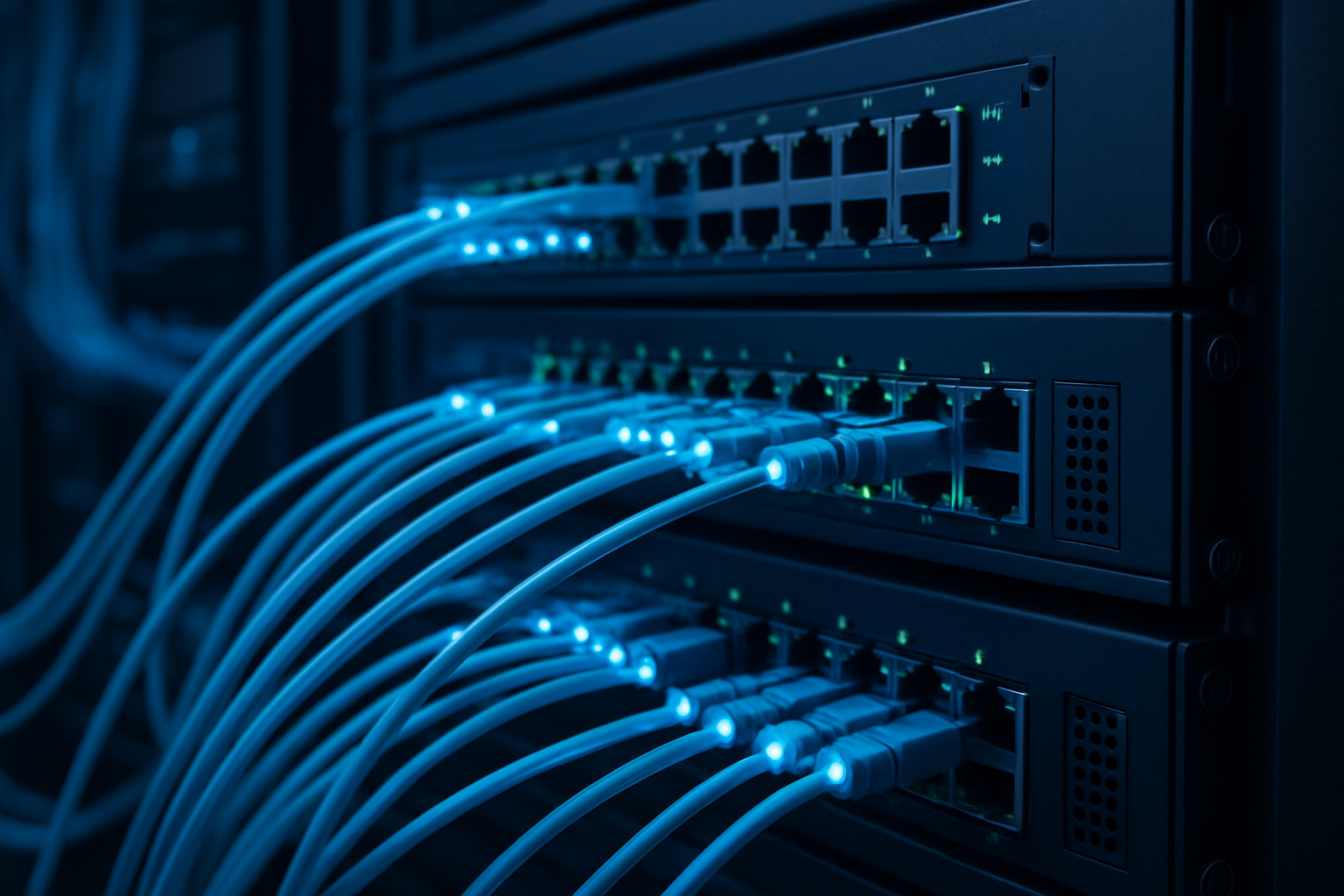

An optical switch enables fast, flexible routing of light signals in fiber networks. Choosing the right one depends on your bandwidth needs, switching speed, and reliability requirements. This guide covers types, key specs, and real-world selection tips for robust, high-bandwidth connectivity.
What Is an Optical Switch?
Optical switches are specialized network devices that manage, route, and control light signals directly within fiber optic networks. Unlike electronic switches, these devices handle data entirely in the optical domain, enabling high speeds with minimal signal loss.
A quick glance at an optical switch’s design reveals it often resembles a conventional switch but uses no electrical conversion during transmission. This feature makes optical switches ideal for long-distance, high-bandwidth, and low-latency environments such as modern data centers and backbone networks.
| Parameter | Description |
|---|---|
| Function | Routes optical signals between fibers |
| Main Benefit | Ultra-fast, low-loss switching |
| Typical Uses | Telecom, data centers, test beds |
| Key Types | MEMS, Electro-optic, 2D/3D Matrix |
How Optical Switches Work
At the core, an optical switch reroutes incoming light from one fiber channel to another, using mechanisms that do not convert photons into electrons. Instead, advanced physical techniques move or alter the path of the light directly.
This direct approach leads to extremely quick switching speeds and very low signal degradation. As a result, many organizations choose optical switches for mission-critical links where even the smallest delay could affect performance.
Key Types of Optical Switches
Several main technologies power today’s optical switches. The design you choose affects network configuration, automation capability, and energy efficiency. Here’s a breakdown of the most common:
- MEMS (Micro-Electro-Mechanical Systems): Uses microscopic mirrors to physically redirect light, enabling high port counts and scalability. Looks very similar to standard electronic crossbars at a glance.
- Electro-Optic: Adjusts refractive properties using electrical fields, delivering ultra-fast switching with no moving parts.
- Solid-State: Leverages advanced materials for silent operation and durability, suitable for specialty or rugged environments.
- 2D/3D Matrix: Multiple intersecting paths create flexible, high-density switching fabrics, perfect for large networks.
The main difference that stands out among these types is the method of controlling light and the practical trade-offs between speed, scalability, and reliability. MEMS-based models often offer a wider range of options for complex layouts, while electro-optic switches excel in environments demanding split-second switching.
Important Specifications to Consider
Choosing an optical switch isn’t just about the raw technology; it involves several performance metrics that must fit your project. Here are the most critical:
- Port Count: Number of input/output fibers available. Higher counts mean more connections.
- Insertion Loss: Amount of signal power lost during switching. Lower values offer higher signal integrity.
- Switching Time: Time taken for the switch to reroute light. The fastest switches are essential in real-time applications.
- Crosstalk: Degree of signal leakage between channels; low crosstalk is ideal for clean data.
- Lifetime and Reliability: Number of cycles and operational durability for long-term service.
- Form Factor: Available in rack-mounted, modular, or compact setups to match space constraints.
If you need redundancy and automation, look for management software compatibility as part of the selection process. Many advanced models now include programmable interfaces or integration with network orchestration tools.
Main Applications of Optical Switches
The demand for optical switching is driven by the exponential growth of digital services and cloud infrastructure. A quick look at major deployments reveals these primary applications:
- Dynamic reconfiguration of optical networks in telecommunications
- Data center interconnects for load balancing and traffic steering
- Automated fiber routing in research, testing, and laboratory environments
- Disaster recovery networks where rapid path changes prevent outages
- Broadcast and media transfer systems requiring high bandwidth and minimal delay
Optical switches adapt quickly to shifting network demands, making them essential as digital traffic grows. With the right configuration, you will enjoy seamless high-performance connections.
Optical Switch Selection Guide
Selecting the right optical switch can feel overwhelming, but focusing on a few steps will help. Let’s break it down:
- List your bandwidth requirements and future scalability needs.
- Check compatibility with existing fiber infrastructure and control systems.
- Compare insertion loss, switching time, and crosstalk ratings between models.
- Consider management options: do you need manual or automated control?
- Assess the physical form factor to ensure proper fit within your equipment rack or space.
- Evaluate vendor support, warranties, and available software features.
- If unsure, request demo units or trial access before final purchase.
Each network is unique, but a structured evaluation will help you avoid costly mistakes and guarantee the reliability your users expect.
Pros and Cons of Optical Switch Technology
Every solution brings both strengths and trade-offs. A realistic workflow experience means understanding these upfront:
- Pros: Ultra-high speed, low latency, high port density, energy-efficient, ideal for next-gen networks.
- Cons: Upfront costs can be high, setup requires fiber expertise, some types have moving parts that may wear over time.
The balance depends on your technical goals and budget. For most mission-critical or data-intensive environments, the benefits often far outweigh the drawbacks.
Frequently Asked Questions (FAQ)
- What is the main advantage of an optical switch over an electronic switch?
- Optical switches process data entirely in the light domain, eliminating conversion delays and supporting ultra-high bandwidth with minimal signal loss.
- Are optical switches compatible with all fiber types?
- Most support both single-mode and multi-mode fibers, but always check manufacturer specifications for optimal performance.
- How long do optical switches last?
- High-quality optical switches are rated for millions of cycles and can last many years if properly maintained in their intended environment.
- Can optical switches be managed remotely?
- Yes, many models include web interfaces, SNMP, or integration APIs for remote management and automation.
- What should I prioritize when selecting an optical switch?
- Focus on bandwidth needs, port count, insertion loss, and management features that align with your network’s size and requirements.