
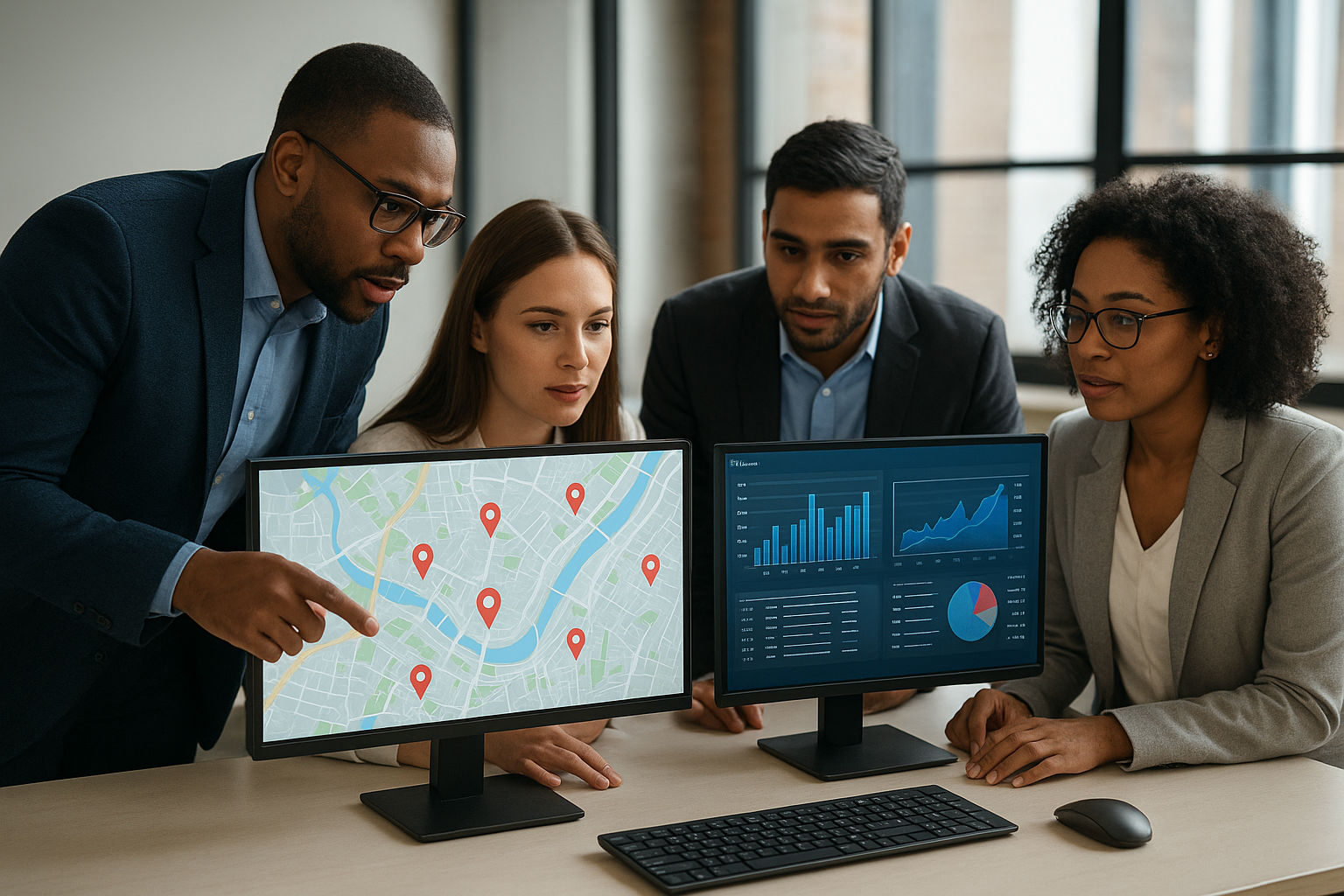

Geo tracking lets businesses monitor and analyze real-time location data to streamline operations and build customer trust. It transforms delivery, workforce, and service experiences by providing accurate movement insights and transparent updates. Adopting geo tracking can lead to better decision-making, higher efficiency, and increased loyalty.
| Quick Facts | Details |
|---|---|
| Definition | Locating objects, people, or vehicles using digital technology in real time |
| Core Technologies | GPS, mobile apps, IoT sensors, GIS software |
| Popular Uses | Fleet tracking, delivery updates, attendance, field service management |
| Top Benefits | Efficiency, transparency, accuracy, service quality |
| Critical Consideration | Privacy and compliance |
What is Geo Tracking?
Geo tracking refers to the process of locating and monitoring the movement of people, vehicles, or assets using digital technologies like GPS, Wi-Fi, and connected sensors. This system captures geographic data in real time, then displays or analyzes it to support business or personal needs. A quick glance shows its use in logistics, mobile delivery, and even personal fitness apps.
The main difference that stands out between basic map applications and geo tracking software is the ongoing, real-time monitoring and historical reporting available in geo tracking systems. Businesses use this data to optimize their resources, respond to changing conditions, and offer customers up-to-date information.
As demand for transparency and efficiency grows in every industry, geo tracking moves beyond being a niche feature to a core operational tool. The next sections explore how it works and why it matters.
How Geo Tracking Works
At its core, geo tracking combines several key components: location sensors (such as GPS chips or beacons), data transmission technologies (like cellular networks or Wi-Fi), and software platforms that collect, process, and display positional data. When an enabled device moves, its location is captured, transmitted, and analyzed.
The path from device to dashboard usually looks like this: sensors pick up the current position, which the software collects at regular intervals. Processing engines then visualize this on maps or timelines for managers, teams, or end-users. Advanced systems offer features like route optimization, geofencing, historical playback, and custom alerts.
You will often see geo tracking platforms available as cloud dashboards, mobile apps, or in combination with enterprise resource planning (ERP) systems, making implementation flexible for diverse needs.
Core Benefits of Geo Tracking
- Real-time visibility – Always know where your people, vehicles, or assets are, reducing delays and guesswork.
- Enhanced decision-making – Analyze routes, timing, and incidents to plan smarter and avoid costly mistakes.
- Higher accountability – Transparent, data-driven records support better compliance and accountability across your business.
- Improved customer satisfaction – Offer accurate delivery ETAs, live updates, and responsive service that earns trust.
- Cost savings – Optimize fuel usage, reduce overtime, and minimize unplanned downtime with smart scheduling and alerts.
- Safety and security – Detect emergencies or unauthorized use quickly, protecting people and resources.
Efficiency gains are just the beginning. For many teams, adopting geo tracking provides a competitive edge by enabling predictive planning and personalized service. But to unlock these benefits, you first need to identify the right use cases for your business.
Key Use Cases in Business
Fleet and Logistics Tracking
Fleet management looks very similar from company to company, but geo tracking offers a wider range of options for scheduling, routing, and compliance. Managers can see each vehicle’s status and history, optimize routes, or respond to delays instantly.
Last-Mile Delivery and Order Tracking
E-commerce and food delivery have made geo tracking familiar to millions. Customers now expect real-time tracking links and dynamic ETAs with every order. Businesses that embrace these features report higher satisfaction and repeat business.
Field Service and Workforce Management
Assigning, monitoring, and auditing field staff becomes simpler and fairer. Geo tracking logs attendance, shift locations, and travel for payroll and performance reviews, producing what many consider the most realistic workflow experience.
New challenges arise around privacy, but leading platforms provide controlled user modes and granular permissions to address these concerns effectively.
Asset Management and Security
Tracking valuable equipment helps prevent loss and misuse, especially in construction, transport, and utilities. Geo fencing can trigger instant alerts if assets move outside approved zones—for both safety and regulatory compliance.
Personalized Marketing and Retail Analytics
Geo tracking enables businesses to analyze foot traffic in stores, send location-based offers, and tailor campaigns to audience movement. This extra layer of insight powers smarter engagement and optimized retail layouts.
Enhancing Customer Trust
The main difference that stands out with geo tracking is how it shifts customer relationships from hopeful waiting to confident anticipation. Real-time updates, accurate notifications, and transparent movement history give clients visible proof of your reliability.
Customers are more likely to remain loyal when they feel informed and respected. For delivery, repair, and service businesses, apps and live maps become simple but powerful trust-building tools. As competition rises, brands that offer transparency will lead.
Choosing Geo Tracking Solutions
Selecting the best geo tracking tool begins with your use case, team size, and technical readiness. Solutions range from standalone mobile apps to integrated enterprise platforms. The best software offers a mix of flexible data collection, clear dashboards, automated alerts, and robust privacy controls.
A quick glance at leading platforms (like Fleet Complete, Verizon Connect, or Google Maps APIs) reveals many overlapping features. The difference often lies in analytics depth, support options, integration flexibility, or pricing tiers. It pays to compare demos and customer reviews, focusing on your workflow pain points.
- Scalability: Can it grow with your team?
- Integration: Does it connect easily to your CRM, ERP, or dispatch system?
- User experience: Is the interface intuitive for managers and field users?
- Alerts and reporting: Are real-time updates and custom reports easy to configure?
- Data security: Is location data protected and compliant with regional laws?
By focusing on these factors, you will enjoy smoother rollouts and sustained efficiency gains.
Challenges and Considerations
Geo tracking introduces new questions about data privacy, consent, and compliance—especially within the EU or for sensitive roles. While transparency improves trust, collecting and sharing location data must remain ethical and legal.
Deployment complexity can also be a barrier. Smaller teams may not have IT staff to manage device provisioning or analyze advanced reports. Choosing a solution that aligns with your technical capabilities is critical for long-term success.
Lastly, employee acceptance is vital. Clear company policies, opt-in mechanisms, and communication about benefits help reduce resistance.
Future of Geo Tracking
As technology evolves, geo tracking will become more accurate, energy-efficient, and privacy-centric. IoT sensors, AI-powered route prediction, and encrypted location storage will power the next wave of innovation.
In retail, logistics, and field service, you will see geo tracking blend with automation, offering predictive ETA adjustments and hands-free reporting. For customers and employees, this means smoother processes and stronger engagement.
Frequently Asked Questions
- What is geo tracking used for?
- Geo tracking is used to monitor real-time location and movement of assets, vehicles, or people for logistics, delivery, employee management, or security.
- How accurate is geo tracking technology?
- Modern GPS-based geo tracking can be accurate to within a few meters outdoors. Performance may vary indoors or in dense urban areas but is steadily improving.
- Is geo tracking legal and ethical?
- Geo tracking is legal when consent and privacy rules are followed. Always check regional laws and use clear policies for staff and customers.
- What is the difference between GPS tracking and geo tracking?
- GPS tracking uses satellite-based positioning only, while geo tracking may combine GPS with Wi-Fi, mobile networks, or other sensors for broader coverage and analytics.
- Can geo tracking improve customer satisfaction?
- Yes, providing real-time order or service updates, transparency, and accurate ETAs significantly boosts customer trust and loyalty.