
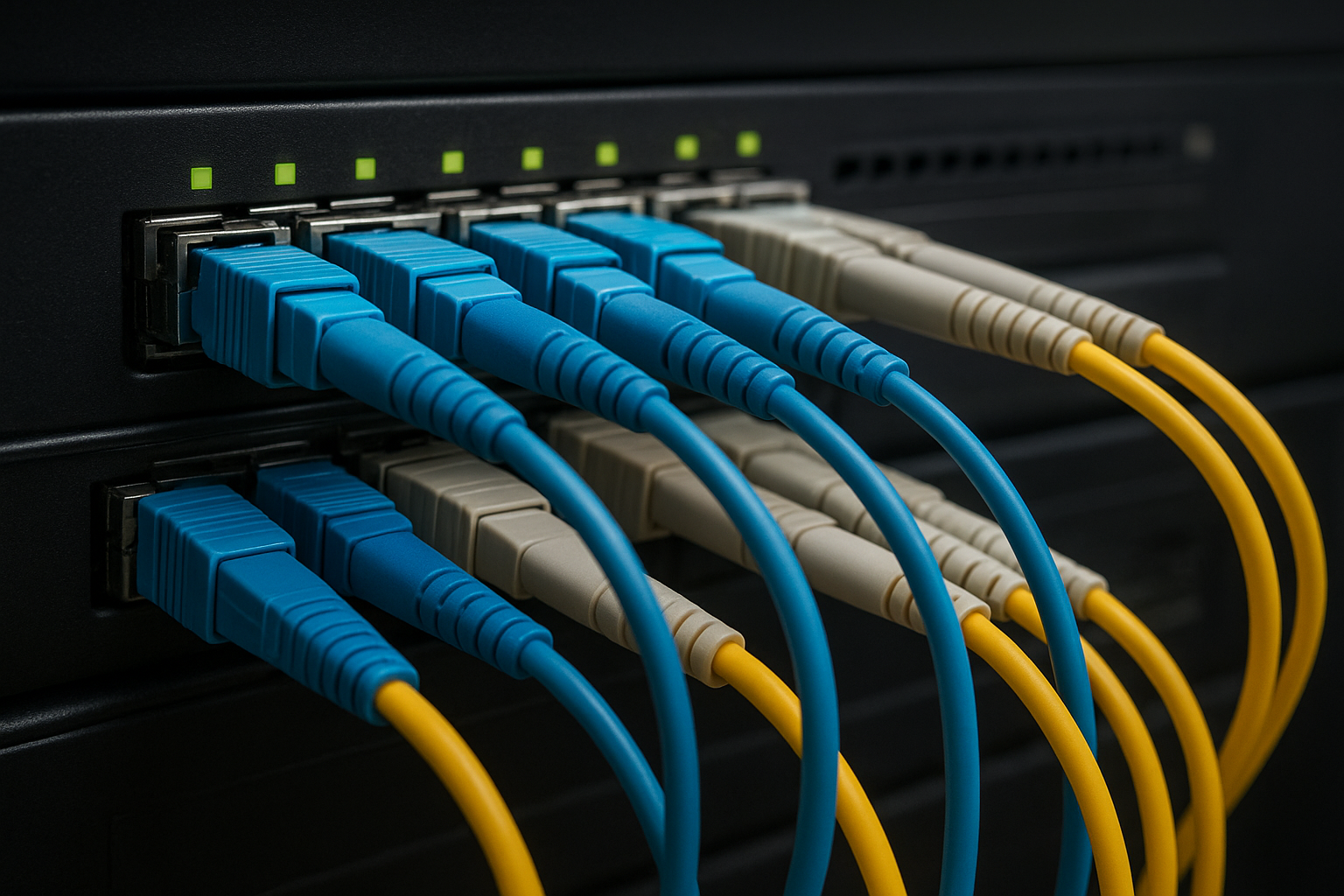

What Is an SC Connector?
The SC connector is a standard, rectangular fiber optic connector developed in the mid-1980s. Renowned for its snap-in push-pull design, the SC (Subscriber Connector or Square Connector) offers fast connections and reliable alignment, making it the go-to solution for many network infrastructures. Its popularity stems from low insertion loss and repeatability, alongside a simple latching mechanism.
At a glance, the SC connector stands out for its stability and ease of use compared to twist-on or bayonet types. Because the design reduces misalignment risk, you often see these in professional and enterprise-grade network settings, where reliability is essential.
| Feature | Description |
|---|---|
| Connector Type | SC (Subscriber Connector / Square Connector) |
| Connection Mechanism | Push-pull latch, snap-in |
| Main Use | Fiber optic cable termination (singlemode & multimode) |
| Ferrule Diameter | 2.5 mm |
| Typical Applications | Data centers, telecommunication, CATV, LAN/WAN |
| Performance | Low insertion loss & high durability |
SC Connector Types
Singlemode vs Multimode
SC connectors come in two primary fiber types: singlemode (yellow boot) for long-distance, high-bandwidth applications, and multimode (beige or aqua boot) for shorter, high-speed connections. The ferrules differ slightly to match these cable types, ensuring signal integrity and preventing modal dispersion.
Polish Styles
- PC (Physical Contact): Standard for most patch cords, minimizing signal loss.
- UPC (Ultra Physical Contact): Features a better surface finish, resulting in lower back reflection—a key for high-speed and high-quality networks.
- APC (Angled Physical Contact): Ferrule end-face polished at 8°, achieving lowest return loss and commonly used in high-density or high-precision installations like FTTH (fiber to the home).
Other Variants
A quick glance at the market shows duplex SC connectors (pairs), mini-SC connectors for compact spaces, and hybrid SC adapters compatible with other formats, allowing you to adapt to diverse network requirements.
Key Features and Specifications
The main difference that stands out for SC connectors is their robust engineering, making them resilient in environments requiring frequent connect/disconnect cycles.
- Ferrule: 2.5 mm ceramic, precision-polished
- Return loss: PC: >40 dB, UPC: >50 dB, APC: >60 dB
- Insertion loss: Typically less than 0.3 dB
- Durability: 1000+ matings without significant performance loss
- Color coding: Yellow (singlemode), Beige/Aqua (multimode), Green (APC)
SC connectors offer a wider range of options compared to earlier fiber connectors. The interface provides a clearer, more stable connection point, and the various polishing styles deliver tailored performance for each environment.
Common Applications
SC connectors are found in almost every type of fiber-optic network where high performance and stability are required. The quick mating feature enables rapid changes or upgrades in network topologies.
- Telecommunications and central offices
- Data center cross-connects
- CATV networks and broadband
- LAN, WAN, and SAN fiber deployments
- Test equipment setups
In many such deployments, you might also find these connectors paired with other standards (like LC, ST) to ensure backward compatibility and seamless upgrades.
Installation Tips for SC Connectors
While SCs are famous for easy handling, proper installation ensures optimal performance. The biggest problem often arises from incorrect fiber end-face cleaning or poor cable preparation, resulting in undesirable insertion loss or back reflection.
Preparation Steps
- Clean both ferrules and adapters carefully before mating
- Use the proper strip length and quality fiber cleaver for cable prep
- Choose the right polish style based on network specifications
Remember to avoid excessive force when inserting or removing. Use the push-pull motion the connector is designed for—this ensures the connection is firm without risking damage to the cable or port.
Choosing SC Connectors: How to Decide
The question of which SC connector to select can seem overwhelming given the variety. The main difference to consider is the polish type and fiber mode, as they determine network compatibility and long-term performance. For high-precision connections (like broadcasting), an APC polish will perform best; for general LAN use, UPC might suffice.
- Analyze your fiber type (singlemode or multimode)
- Define the performance requirements (insertion & return loss)
- Consider the environment (data center, outdoor, field deployable)
- Check for color coding and port compliance
Always match connectors with the equipment ports for minimal signal degradation, and consult vendor datasheets to verify specification compatibility.
Vendors and Availability
Most fiber hardware vendors, from global brands to specialty suppliers, carry a range of SC connectors. Availability is generally not a problem, but differences exist in quality, price, and after-sales support.
- Cisco, Corning, Panduit, Leviton
- Online platforms: Fiberstore, Amazon, Newegg
- Value options from generic OEMs
A quick glance at product listings shows wide pricing variations. Look for connectors with guaranteed specifications, robust support, and certifications (RoHS, ISO, or Telcordia standards).
FAQ
- What does SC stand for in SC connector?
- SC stands for Subscriber Connector or Square Connector, reflecting its use in telecom networks and unique shape.
- Are SC and LC connectors interchangeable?
- No, they have different ferrule sizes and form factors, but hybrid adapters can connect SC to LC interfaces.
- How do I clean SC connectors?
- Use a lint-free wipe with approved fiber cleaning fluid, or a dedicated connector cleaner pen, and avoid touching end-faces with bare hands.
- Which is better: SC or LC connectors?
- LC connectors are smaller, suited for high-density applications, while SC is often used for standard patching and ruggedness. Choice depends on your specific application.
- Can SC connectors be reused?
- Yes, with quality fiber prep and cleaning, SC connectors can be mated and unmated repeatedly with minimal degradation—often over 1000 cycles.