
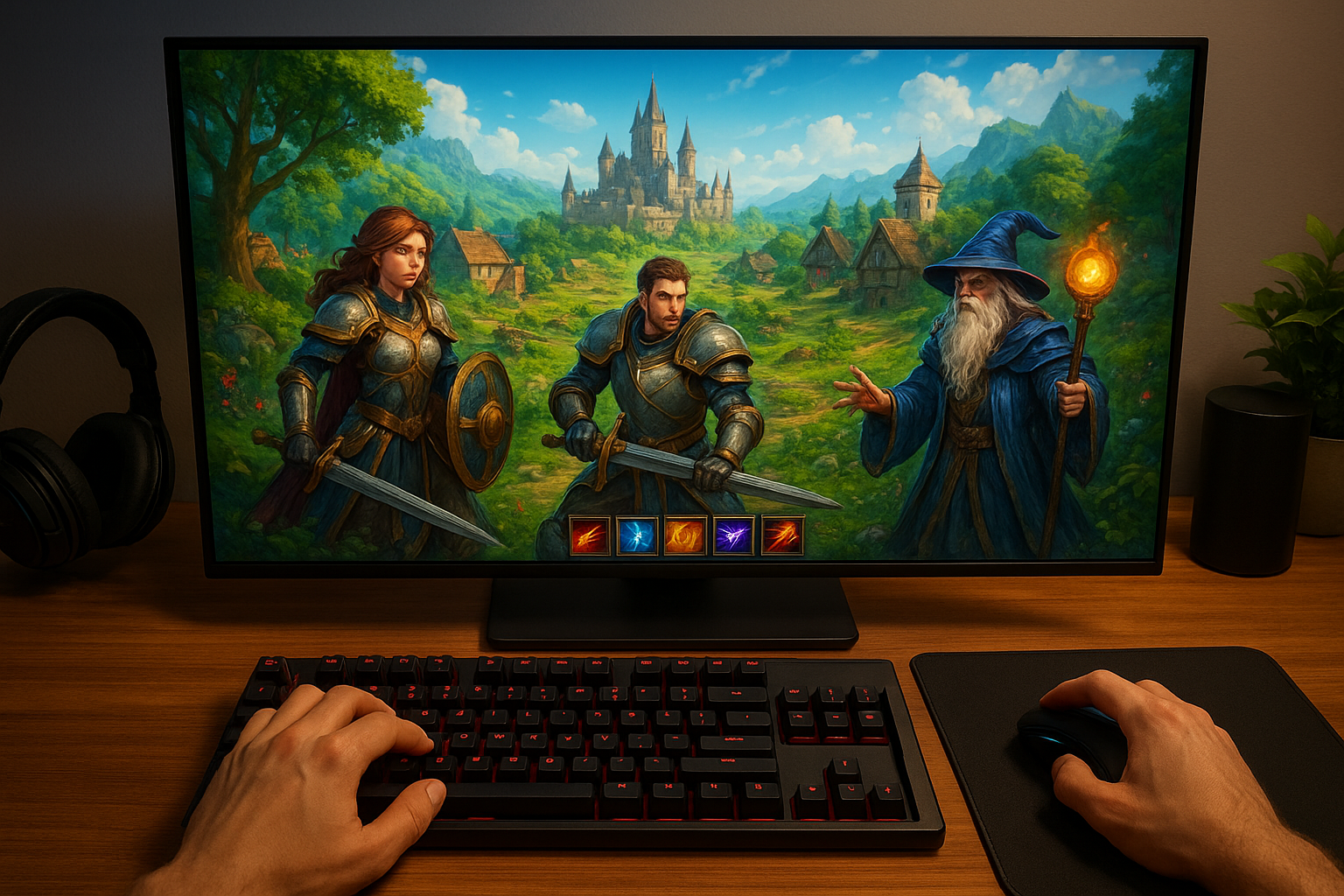

CRPGs, or computer role-playing games, blend dynamic storytelling, character progression, and strategic decision-making for deep, engaging adventures. This guide reveals the core features, history, and the top CRPG titles that have left a lasting impact on the genre.
CRPG: Important Information At a Glance
| Term | Meaning |
|---|---|
| CRPG | Computer Role-Playing Game |
| Typical Platform | PC (Windows, Mac OS, Linux) |
| Core Feature | Character customization & narrative depth |
| Most Iconic Style | Isometric visuals, party-based, text-driven or voice-acted |
| Best Examples | Baldur’s Gate, Divinity: Original Sin 2, Fallout |
| Target Audience | Strategy and adventure game fans, story seekers |
What is a CRPG?
The term CRPG stands for Computer Role-Playing Game. These games give players the chance to control one or more characters in a digital world, making choices that shape the story and the outcome. The player’s involvement often centers around character development, tactical combat, and complex storylines.
Unlike their console or action-focused cousins, CRPGs offer a slower pace, emphasizing reading, strategy, and detailed management. A quick glance at a CRPG often reveals an isometric perspective, dense menus, and a party of adventurers ready for anything.
This format allows for a high level of customization and player-driven progression, with sprawling worlds and intricate choices at every turn. But how did CRPGs reach their current form?
Hallmarks of CRPGs
Key Features That Define the Genre
- Deep Character Customization: Players build heroes from the ground up, shaping stats, skills, and appearance.
- Branching Storylines: Decisions matter, leading to multiple outcomes and replay value.
- Turn-Based or Real-Time with Pause Combat: Offers time to strategize and reflect on each move.
- Group or Party Management: Control a roster of unique characters with their own stories and abilities.
- Rich Dialogue and Exploration: Interaction with the world is often as important as combat.
A casual look at the interface shows extensive text logs, customizable equipment, and complex quest journals. What’s the appeal? The depth and freedom, along with narratives rarely matched by other genres.
A Brief History and Evolution
The journey of CRPGs began in the late 1970s and early 1980s. Titles like Akalabeth: World of Doom and Wizardry introduced core RPG elements to computers, modeling adventures after Dungeons & Dragons. Early CRPGs used simple graphics, focusing instead on systems and story.
The genre truly took off with games like Baldur’s Gate and Planescape: Torment in the late 1990s. These featured epic narratives, memorable companions, and moral choices at every turn. Over time, CRPGs integrated better visuals, smoother controls, and even voice acting, without losing their complexity.
Still, players sometimes question whether modern CRPGs can capture the magic of the classics. Newer titles, such as Divinity: Original Sin 2, prove the genre keeps evolving, blending old-school depth with new accessibility.
Top CRPG Titles of All Time
What makes a CRPG stand out from the rest? Memorable characters, impactful choices, and tactical gameplay set the best games apart. Here’s a selection of must-play CRPGs that have shaped the genre:
- Baldur’s Gate II: Shadows of Amn – Legendary dialog, party depth, D&D authenticity
- Divinity: Original Sin 2 – Highly interactive environments, co-op options, creative combat
- Planescape: Torment – Philosophical storytelling, unique world design
- Fallout (Classic) – Post-apocalyptic setting, open-ended quests
- Icewind Dale – Tactical battles, atmospheric storytelling
- Pillars of Eternity – Spiritual successor to classic 90s titles
- Wasteland 2 – Turn-based strategy, player-driven world state
- Tyranny – Morally complex choices, alternate timelines
- Arcanum: Of Steamworks and Magick Obscura – Unique magic/tech blend, deep customization
- Disco Elysium – Narrative focus, innovative skill systems
Each title looks very similar at first glance but offers a distinct tone, ruleset, and player experience. The main difference often comes down to world and mechanics, letting you find the journey that fits best.
CRPGs vs. Other RPG Types
Confusion often arises between CRPGs, JRPGs (Japanese Role-Playing Games), and Action RPGs. At a glance, all focus on story and character, but the differences quickly emerge.
Main Differences Explained
- CRPGs – Heavy emphasis on player choice, party management, tactical combat, and Western-style fantasy or dystopian themes.
- JRPGs – Linear storytelling, fixed characters, turn-based or real-time combat, often with anime-inspired visuals.
- Action RPGs – Fast-paced, reflex-based combat with lighter character management and progression systems.
The interface provides a clearer view of complexity in CRPGs, while other genres prioritize action or cinematic flair. If you’re looking for control and story depth, CRPGs stand out as the ideal choice.
How to Choose the Right CRPG for You
With so many choices, picking the best CRPG can feel overwhelming. The key is to identify what you want: heavy story, deep combat, or simply a new world to explore? A quick scan of reviews and gameplay videos will often reveal the style that clicks for you.
- If you love reading and narrative, try Planescape: Torment or Disco Elysium.
- If you want party-based strategy, Baldur’s Gate II or Pillars of Eternity excel.
- For open exploration, classic Fallout and Wasteland 2 deliver freedom.
- For modern graphics and co-op, Divinity: Original Sin 2 is unbeatable.
Consider your preferred setting (fantasy, sci-fi, steampunk), interface style, and time commitment. The good news: almost every CRPG offers massive replay value, so you can revisit choices and outcomes.
The Future of CRPGs
Will CRPGs remain relevant as other genres evolve? The answer looks promising. Modern platforms make complex mechanics more accessible, and players keep returning for stories and decisions that matter.
Developers experiment with AI-driven choices, cooperative multiplayer, and dynamic storytelling engines. The next decade should see even deeper immersion, while keeping the genre’s roots alive. You can expect even wider accessibility, drawing in new fans and creators alike.
In the meantime, the classics remain available on digital stores, and indie developers breathe fresh ideas into the scene. If you’re only now diving in, the world of CRPGs has never been richer.
FAQ on CRPGs
- What does CRPG stand for?
- It means Computer Role-Playing Game, emphasizing digital gameplay and player-driven decisions.
- How are CRPGs different from tabletop RPGs?
- CRPGs automate mechanics and offer visual worlds, while tabletop RPGs are often pen-and-paper group experiences led by human Game Masters.
- Is every computer RPG a CRPG?
- Not exactly — CRPG typically refers to games with strategic party management, narrative branching, and depth beyond action-focused or platform-based RPGs.
- Can you play CRPGs solo or in co-op?
- Most CRPGs are solo, but several, like Divinity: Original Sin 2, offer excellent multiplayer campaigns.
- Are CRPGs hard to play?
- The learning curve can be steep, but many modern titles include helpful tutorials and scalable difficulty. A few sessions are usually all it takes to find your stride.