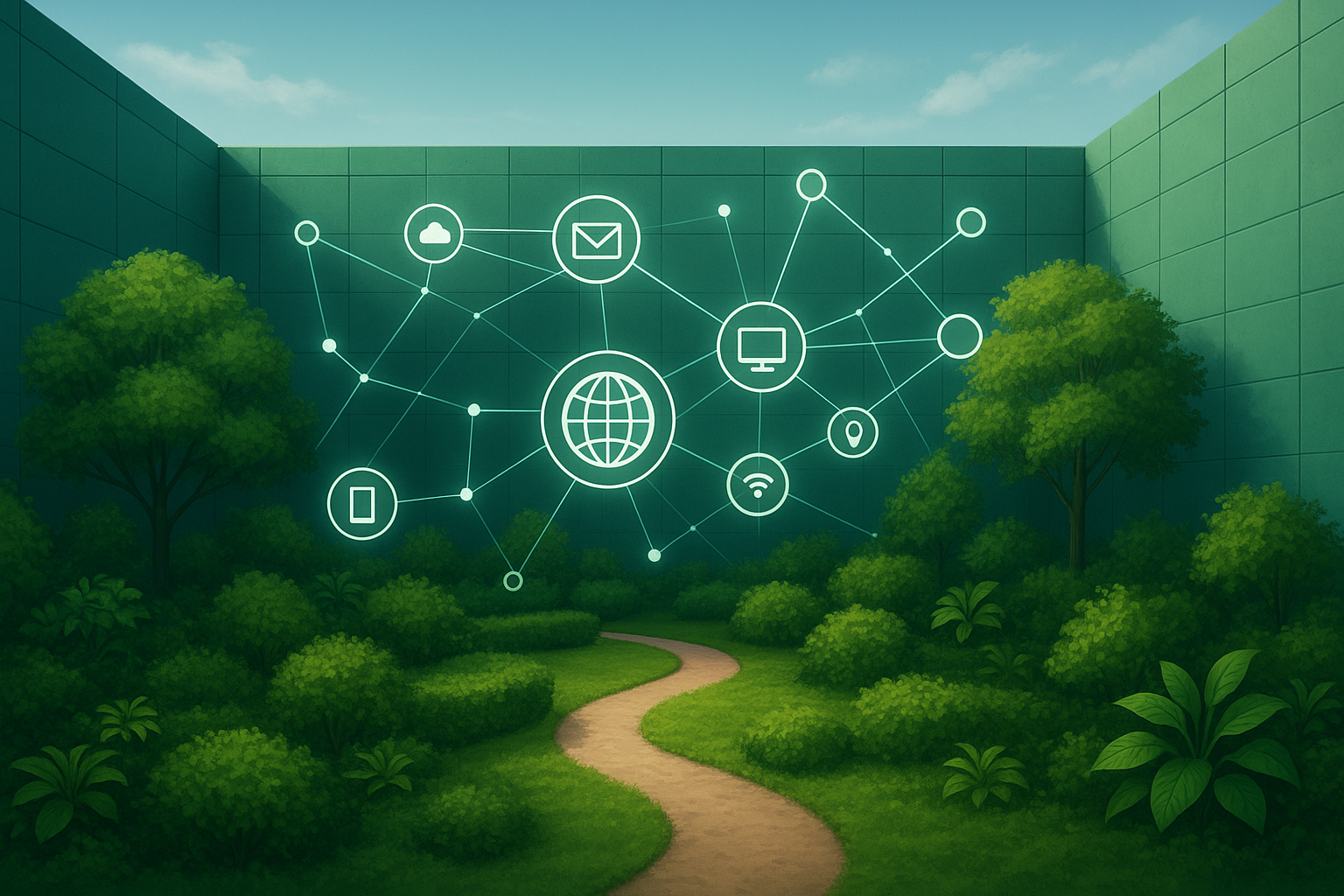

A walled garden is a closed digital ecosystem where the platform owner controls content, access, and interactions. These systems enhance privacy and drive business growth but can limit user freedom and interoperability. Understanding walled gardens is crucial as they shape today’s digital landscape, from social media to app stores and even real-world gardens.
| Key Aspect | Details |
|---|---|
| Definition | A closed digital or physical system where the owner sets the rules and controls user access |
| Famous Examples | Apple App Store, Facebook, Amazon, some smart home ecosystems |
| Main Advantage | Increased privacy, safety, and tailored experiences |
| Main Drawback | Limited interoperability, potential for censorship |
| Opposite System | Open platforms (like the open web or open-source software) |
What Is a Walled Garden?
A walled garden refers to a space—digital or physical—where external access and user activities are tightly controlled by an owner. In the technology context, companies create these contained environments to shape what you see, use, or share. You may recognize this when you notice certain features or apps are only available within one platform. At a glance, everything feels curated and secure, but there’s more beneath the surface.
This concept isn’t limited to the digital world. In horticulture, a walled garden is quite simply a literal garden surrounded by walls, protecting it from outside elements. Transposing this to technology, think of your favorite app ecosystem: users interact, share, or purchase items—all within defined boundaries. These boundaries are both protective and restrictive. The main difference from the open internet is the level of control: in a walled garden, the operator makes the rules.
But why do companies and organizations favor such platforms? The answer is two-fold: security and business growth. Yet, this creates new challenges for users and developers who value flexibility. As ecosystems grow, so do their walls. Where does this control lead us?
Digital Walled Gardens: Real-World Examples
Apple’s App Store
The Apple App Store stands as a classic digital walled garden. Only Apple-approved apps appear inside, and all purchases go through Apple’s payment system. This produces a safer, consistent user experience—the main advantage that stands out—but limits the installation of apps from outside sources.
Facebook and Social Media Platforms
Facebook, Instagram, and similar platforms offer interconnected features—messaging, commenting, sharing—accessible only to registered users. Their algorithms organize content, and their closed nature means you rarely encounter non-platform content unless permitted.
Amazon’s Ecosystem
Amazon not only sells products but integrates services like Prime Video and Echo smart devices into a single ecosystem. The processing engine is quite powerful, but third-party software integrations are limited compared to open alternatives. A quick glance reveals a seamless experience for loyal users.
Other Notable Examples
- Smart home platforms (e.g., Google Home, Apple HomeKit)
- Gaming consoles with proprietary online stores
- Messaging apps with closed networks (e.g., iMessage)
Each of these platforms looks very similar in terms of strategy—they close off the environment to ensure more control and often foster customer loyalty. But with every gain comes a question: are users truly better off in such ecosystems?
Walled Gardens vs Open Systems
Comparing a walled garden to an open system reveals fundamental differences. Open platforms, like the wider web or open-source projects, allow greater interoperability, user choice, and developer freedom. Anyone can contribute, redistribute, or connect different components freely.
In contrast, a walled garden’s rules mean tighter curation but less flexibility. A quick glance at both options shows that open systems encourage exploration but can expose users to risks. The main difference that stands out is how much freedom you have—and how easily you can move your data or content across services.
Key Differences Between Walled Gardens and Open Systems
- Control: Walled garden owners decide what is allowed; open systems rely on community input.
- Access: Open systems let anyone participate; walled gardens often require membership or approval.
- Customization: Open platforms allow modifications; walled gardens restrict options.
- Security: Walled gardens offer built-in protections, while open systems need community oversight.
- Growth: Open systems spread quickly but lack monetization controls; walled gardens can scale profitably.
Advantages of Walled Gardens
So, why do walled gardens remain popular? The answer lies in balancing protection with experience. For users, they provide a safer space—platforms can block harmful content, secure transactions, and ensure updates.
For companies, owning a walled garden means total control over the economy of the ecosystem. They can refine design, limit competitors, and launch exclusive features smoothly. The interface provides a clearer view for the end user, and support is more streamlined compared to fragmented, open environments.
Sometimes, this is exactly what you want. Imagine trusting your smart home to a single vendor, knowing you’ll get reliable service. The different user modes are distinctly styled, producing what we consider the most seamless experience.
Drawbacks and Criticisms
However, there are significant limitations. Critics argue walled gardens limit innovation and user autonomy. When you need an alternative feature or want to use software outside the system, the high walls prevent easy change. A quick glance shows how users get locked in, depending on the platform for years.
Developers face hurdles, too. Permission-based ecosystems slow down new releases, and profit sharing can be restrictive. Users may lose the ability to move data freely, while businesses can face barriers to entry. When competitors are also gatekeepers, the digital landscape becomes less diverse.
This creates tension: users enjoy safer, curated spaces at the cost of openness and flexibility. The more locked-in you are, the harder it becomes to leave. As digital platforms become ubiquitous, is this trade-off sustainable?
Walled Garden in Horticulture
The term “walled garden” also has a literal meaning in horticulture. Historically, gardeners built high walls to protect plants from wind, pests, and harsh weather. These physical gardens became sanctuaries for rare or delicate plants—much like digital platforms nurture exclusive content and communities.
Just as the technological walled garden limits what comes in or goes out, the horticultural version preserves an internal ecosystem. The analogy is clear: both provide protection but require maintenance, and both can isolate their contents.
Today, you’ll often find such gardens in historic estates or botanical parks, reminding us that enforced boundaries can bring beauty and order—or limit what grows.
Impact on Privacy and Growth
In the online sphere, walled gardens have catalyzed both increased privacy controls and accelerated business growth. Because owners can vet apps, monitor user activity, and block malicious actors, users often feel more secure inside these platforms.
For growth, businesses inside a walled garden enjoy built-in exposure and defined audiences. Loyal customers stay engaged—driven by exclusive features, content, or interoperability inside the ecosystem. At the same time, companies collect valuable data to refine offerings and advertising.
Still, this comes at a cost. Walled gardens can stifle the diversity of content, leading to echo chambers and barriers for new entrants. Privacy may look stronger, but only as far as the platform’s own controls allow. When digital borders thicken, innovation must find new ways to thrive.
Strategies for Users and Businesses
For End Users
- Evaluate the trade-offs of security vs freedom before investing in a platform
- Read terms of service to understand data usage and portability
- Consider hybrid approaches—using both walled and open systems
- Take steps to export data periodically
- Advocate for transparency and clear privacy controls
For Businesses
- Develop clear policies for maintaining privacy within your walled garden
- Encourage interoperability wherever feasible to reduce user lock-in
- Focus on user experience to retain members inside your ecosystem
- Watch for regulatory trends—especially regarding data rights and fair access
- Monitor user sentiment and adapt to market needs
Important Points to Remember
- Walled gardens offer both protection and restriction.
- Ecosystem owners set the rules, not always to user benefit.
- Careful navigation helps users and creators thrive in any system.
FAQ
- What is a walled garden in technology?
- A walled garden is a digital environment where the owner strictly regulates what content or applications are allowed, who can access them, and how information circulates. This contrasts with open systems, where anyone can participate or innovate freely.
- Are walled gardens always bad?
- Not necessarily. They often boost security and offer seamless experiences, but they can limit user choice and stifle innovation. Weigh the pros and cons for your needs.
- How do walled gardens impact privacy?
- They typically provide stronger privacy by controlling data flow and access. However, users rely on the owner’s policies, and sometimes personal information remains in the platform’s exclusive control.
- Can users move content out of a walled garden?
- In most cases, it’s difficult. Data portability is improving but often limited by platform restrictions or proprietary formats. Periodically backing up data is a good practice.
- Why do companies prefer walled garden strategies?
- Walled gardens let companies shape user experience, curate content, increase security, and develop a profitable ecosystem—while keeping potential competitors at bay.
- What is a walled garden in horticulture?
- It’s a garden with high walls designed to protect plants from harsh conditions and pests—mirroring the digital version’s protective boundaries.
- Is the trend toward walled gardens increasing?
- Many major tech companies are strengthening their digital boundaries for privacy and business reasons, but open systems continue to thrive in parallel.