
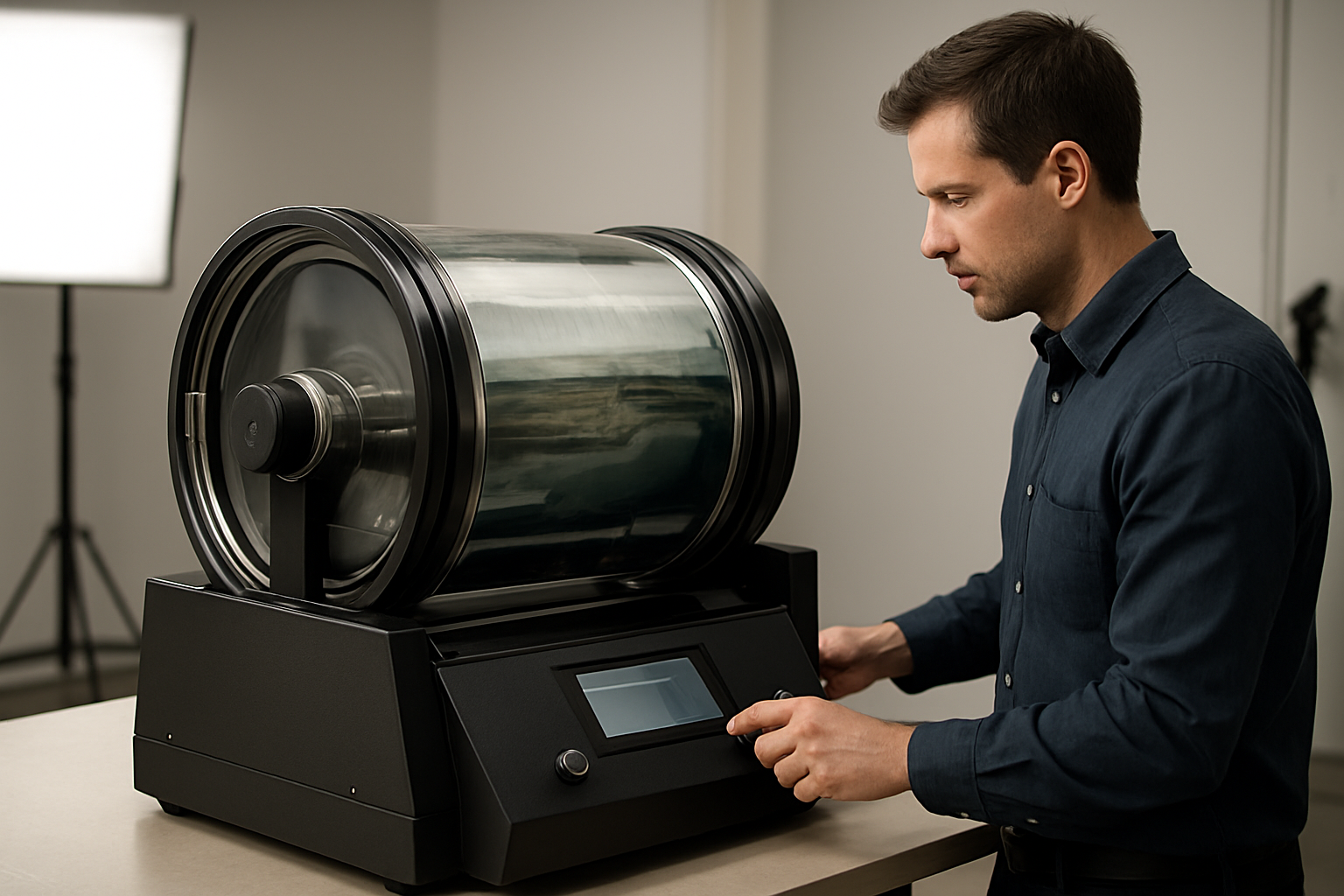

A drum scanner uses a spinning glass drum and advanced photomultiplier tubes to achieve exceptional film scanning quality. It captures remarkable detail and color but comes at a higher cost and with complex handling. This article walks you through how drum scanners work, their pros and cons, pricing, comparisons, and tips for choosing the right scanning option.
What Is a Drum Scanner?
A drum scanner is a professional imaging device designed to deliver the highest-quality digital scans from photographic film, transparencies, and reflective prints. At a glance, it looks like a large box with a clear cylindrical drum and precision electronics attached.
Drum scanners were once vital in prepress and publishing but are now prized by high-end photographers, printmakers, and archivists. The main difference that stands out is their incredible resolution and dynamic range, which surpass most modern flatbed and film scanners.
| Key Feature | Description |
|---|---|
| Scanning Method | Film mounted on a rotating drum, read by photomultiplier tubes (PMTs) |
| Resolution | Up to 12,000+ dpi |
| Dynamic Range | Very high (Dmax 4.0+) |
| Supported Formats | 35mm, medium format, large format, reflective |
| Best For | Archival, gallery prints, commercial work |
How Drum Scanners Work
A drum scanner loads your film onto a clean, transparent glass drum with mounting fluid to ensure maximum contact and zero air gaps. The drum spins at high speed as a precision light beam passes through the emulsion. This beam is detected by photomultiplier tubes (PMTs), which offer unmatched sensitivity.
Unlike flatbed or consumer film scanners, a drum scanner’s physical process reduces noise and maximizes color accuracy. The result is a digital file with outstanding sharpness, detail in shadows and highlights, and virtually no optical distortion.
- Step 1: Film is cleaned and mounted wet onto the drum using special fluid and tape
- Step 2: Drum is inserted into the scanner and begins rotating at a stable speed
- Step 3: Laser beam scans each pixel as the drum spins, transmitting data to PMTs
- Step 4: Data is processed, resulting in an ultra-high-resolution image
Advantages and Drawbacks
Why Choose a Drum Scanner?
The main advantage that stands out is image quality. Drum scanners create files capable of enormous enlargements—ideal for fine art, high-end commercial applications, or museum archiving. Subtle colors, deep blacks, and minute details are more faithfully represented than with most other scanners.
- Extreme optical resolution and low noise at all sizes
- Best-in-class dynamic range (captures more highlight/shadow info)
- Handles damaged or dense negs better than most other scanners
- Produces files with realistic, rich color depth (48-bit and above)
Possible Limitations to Consider
Despite these benefits, drum scanners are not for every workflow. There are key drawbacks to consider before investing time or money.
- Bulky and expensive—rarely found outside pro labs
- Slow operation (often 20–60+ min per scan with prep)
- Wet mounting requires training and increases risk of damage
- Maintenance and supplies (mounting fluid, tape) add cost
Drum Scanners vs Other Scanners
A quick glance at other film scanning options—like flatbed scanners or dedicated film scanners—shows clear differences in resolution, ease of use, and cost. Let’s compare the most common approaches to make your decision easier.
| Feature | Drum Scanner | Flatbed Scanner | Dedicated Film Scanner |
|---|---|---|---|
| Optical Resolution | Up to 12,000 dpi | 3200–6400 dpi | 4000–7200 dpi |
| Dynamic Range | Dmax 4.0+ | Dmax 3.2–4.0 | Dmax 3.0–4.0 |
| Scan Quality | Exceptional | Good–Excellent | Excellent |
| Speed | Slow | Medium–Fast | Fast |
| Price (New) | $$$$ | $$–$$$ | $$–$$$ |
| Ease of Use | Hard | Easy | Easy–Medium |
| Archival Use | Best | Good | Good |
The main difference that stands out: if your workflow requires the absolute best quality, only drum scanning will suffice. For most users digitizing family photos or standard prints, a good flatbed or film scanner works beautifully.
Typical Models, Specs & Pricing
Leading drum scanner models include the Heidelberg Tango, Howtek D4000, Aztek Premier, and Screen ScanMate series. These robust machines offer years of service but are engineered for heavy-duty use, making maintenance and spare parts ongoing concerns.
Specs to look for in a drum scanner:
- Maximum optical resolution (dpi: higher is better for huge prints)
- Usable film size (from 35mm up to 11×14″ or bigger)
- Bit depth per channel (16-bit preferred for fine color)
- Dynamic range (Dmax 4.0+ ideal for tough negatives)
- Good support and service options
New drum scanners are extremely rare; most are only found secondhand or through specialist dealers. Prices range dramatically, but expect:
- Used units: $3,000–$25,000 (depending on model, condition, and accessories)
- Single high-res scan from a pro lab: $35–$120 per image
- Additional costs: mounting fluid ($25–$60/liter), tapes, calibration tools
Should You Rent or Buy?
For most photographers, rental or professional scanning service is more practical. The cost, maintenance, and learning curve of drum scanner ownership is only justified for heavy users handling high-value images on a regular basis.
Renting time on a drum scanner or working with a specialist service eliminates the risk of damaging irreplaceable film and ensures expert handling. Many labs offer scans on a per-image basis with discounts for large batch jobs.
- Rent or lab scan for best results on occasional, archival, or irreplaceable images
- Buy only if your work requires hundreds of scans per month
- Consider community darkrooms or universities for access to well-maintained equipment
When to Choose Drum Scanning
If you need scans for gallery prints, high-end publications, or archival preservation, drum scanning remains unmatched. The ability to extract maximum detail from both highlights and shadows is a game-changer for films with tricky exposures.
But not all projects require this level of fidelity. For web sharing, casual prints, or quick archiving, modern flatbed or film scanners provide great results at a fraction of the cost and complexity. That’s why it’s important to match the scanning process to your end goal.
FAQ: Drum Scanner Technology
How does a drum scanner differ from a flatbed scanner?
Drum scanners use spinning glass drums and PMTs to create higher-resolution, lower-noise scans. Flatbeds use linear CCDs or CIS sensors which are easier to use but can’t match a drum’s resolution and dynamic range.
Is drum scanning safe for my film?
Yes, in expert hands. The wet mounting process increases risk for scratches if done incorrectly, but professional labs follow strict procedures to keep originals safe.
What file formats do I get from a drum scan?
Typically, drum scans are delivered as TIFF files at very large sizes (100MB–1GB+) in 16-bit color, preserving maximum detail for editing or printing.
Is it worth drum scanning 35mm film?
Only if you need wall-sized prints or extreme cropping. Otherwise, dedicated film scanners or high-end flatbeds generally suffice for 35mm negatives.
Can I use a drum scanner myself?
You can, but training is essential. Poor mounting or mishandling the drum can damage film or the machine. Most users rely on labs or experienced operators.